Documented case law: what the signing technician risks (LOE Art. 17 and ruinous defects)
A documentary guide, with anonymised real cases, on the technician's liability framework: the ten-year/three-year/one-year liability of the LOE and the doctrine of Art. 1591 of the Civil Code. And how AI helps document due diligence.
Informational document. This is not legal advice: for a specific case, consult your legal advisers.
When a technician signs off on a project, they take on a map of liabilities that many clients —and some technicians— only discover when a claim arrives. We summarise it here in document form, supported by real cases we have audited (anonymised).
The framework: Art. 17 of the LOE
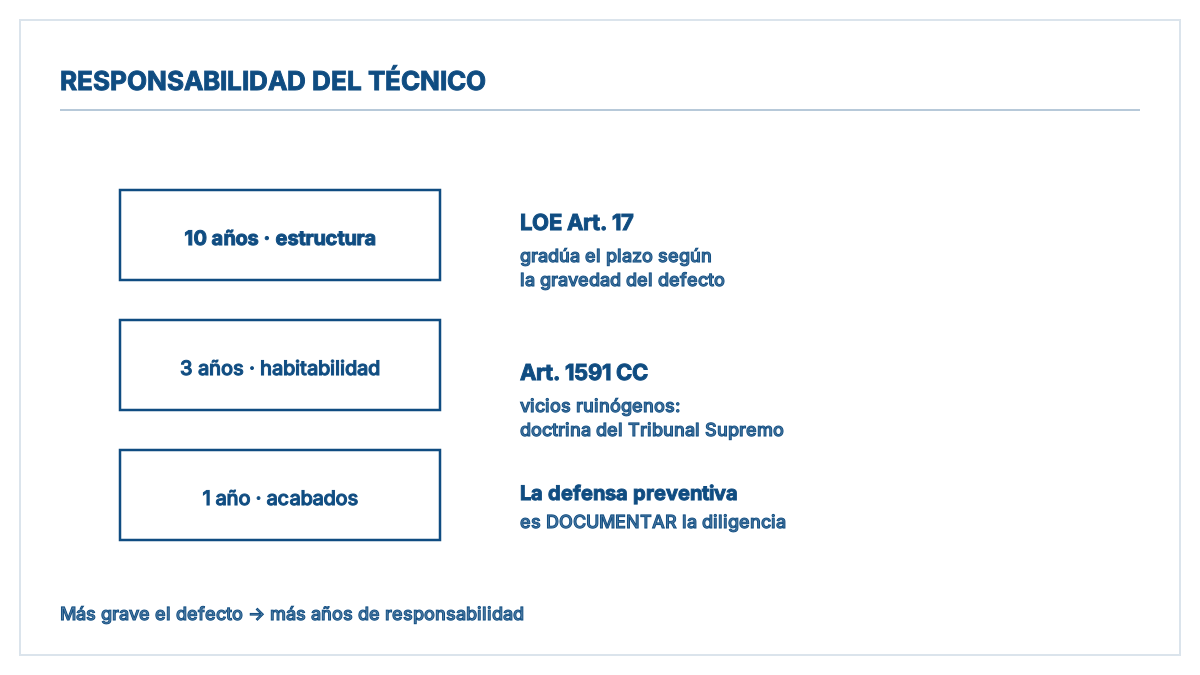
The Building Regulation Act (LOE) grades liability for defects according to their severity:
- Ten-year (10 years) — damage affecting the foundations, supports, beams, floor slabs and other structural elements that compromise the building's strength and stability.
- Three-year (3 years) — defects in the construction elements or installations that fail to meet the habitability requirements.
- One-year (1 year) — execution defects affecting the finish or final touches.
The historical doctrine: Art. 1591 of the Civil Code
Before and alongside the LOE, Art. 1591 of the Civil Code and the Supreme Court doctrine on ruinous defects have underpinned liability for functional ruin for decades: the building does not have to collapse; it is enough for a serious defect to compromise its soundness or render it unfit for use. This is the body of doctrine that most construction claims draw upon.
What we have seen in real audits
In the projects we audit, the findings that generate the most exposure recur again and again:
- Structure altered without prior assessment (real refurbishment case) → direct ten-year risk.
- Structural fire resistance left unjustified → stability in the event of fire not guaranteed.
- Discrepancies between the design report, drawings and appendices → the evidence of compliance becomes inconsistent.
- Absence of a use and maintenance manual → a factor that worsens the technician's position when a defect appears due to a lack of documented maintenance.
How documenting due diligence helps
The best preventive defence is to leave a record that things were done properly. That is where an AI verification adds value: it produces a traceable report —each finding with its article and its remedy— that demonstrates a diligent review of the project before sign-off. It does not remove liability (the signature still belongs to the competent technician), but it documents and reduces it.
If you want a preventive read of your project against this liability framework, try the AI verifier or write to us via contact.
Tags
- jurisprudencia
- LOE
- responsabilidad
- verificador-ia
- caso-real